Bridal Makeup Trial in New Jersey: What to Expect and How to Prepare

Your wedding makeup should feel exciting, not uncertain.
A bridal makeup trial in New Jersey gives you the opportunity to test your wedding-day makeup before the actual wedding morning, communicate what you love, make adjustments, and feel confident about your final look.
A trial is more than simply getting your makeup done.
It's a chance to see how your makeup looks in person, how it photographs, how comfortable it feels, and whether the overall look matches your dress, hair, accessories, and wedding style.
For most brides, scheduling the trial approximately 2–3 months before the wedding is a practical starting point. The exact timing can vary depending on your wedding plans and your makeup artist's process.
In this guide, we'll explain what happens during a bridal makeup trial, when to schedule one, what to bring, how to prepare your skin, what questions to ask, and what to do if you want to make changes to your look.
What Is a Bridal Makeup Trial?
A bridal makeup trial is a dedicated appointment where you and your makeup artist create and refine your wedding-day makeup look before the wedding.
Instead of waiting until your wedding morning to see the finished result, you get an opportunity to work through the details ahead of time.
Your trial may include:
Skin preparation
Foundation
Concealer
Eye makeup
Eyeliner
Lashes
Blush
Contour
Highlight
Lip color
Setting products
Traditional or airbrush makeup, depending on the artist
The goal is to create a makeup look that feels like you, while also giving you the polished finish you want for your wedding day.
A professional bridal makeup trial should also be collaborative.
Your makeup artist should listen to your preferences, answer your questions, and make adjustments based on your feedback.
When Should You Schedule Your Bridal Makeup Trial?
For many brides, 2–3 months before the wedding is a good time to schedule a bridal makeup trial.
This gives you enough time to make adjustments while keeping the trial relatively close to the wedding.
Some New Jersey bridal artists recommend a 2–3 month window, while others recommend slightly broader ranges depending on the bride and the services being provided.
Try not to schedule your trial so close to the wedding that there is no time to make changes.
At the same time, doing the trial extremely early may not always be ideal.
Your skin, hair color, tan, wedding style, accessories, and makeup preferences can change during the months leading up to your wedding.
The goal is to have your trial close enough to the wedding that it represents the look you're actually planning to wear.
What If I Need More Than One Trial?
Some brides may want a second trial.
A second appointment can be useful if:
You want to compare two different looks
You made significant changes to your wedding style
You want to adjust your eye makeup
You want a different foundation finish
You want to test another lip color
You are trying a different lash style
Your first look wasn't quite what you imagined
Your makeup artist can help you determine whether another trial is necessary.
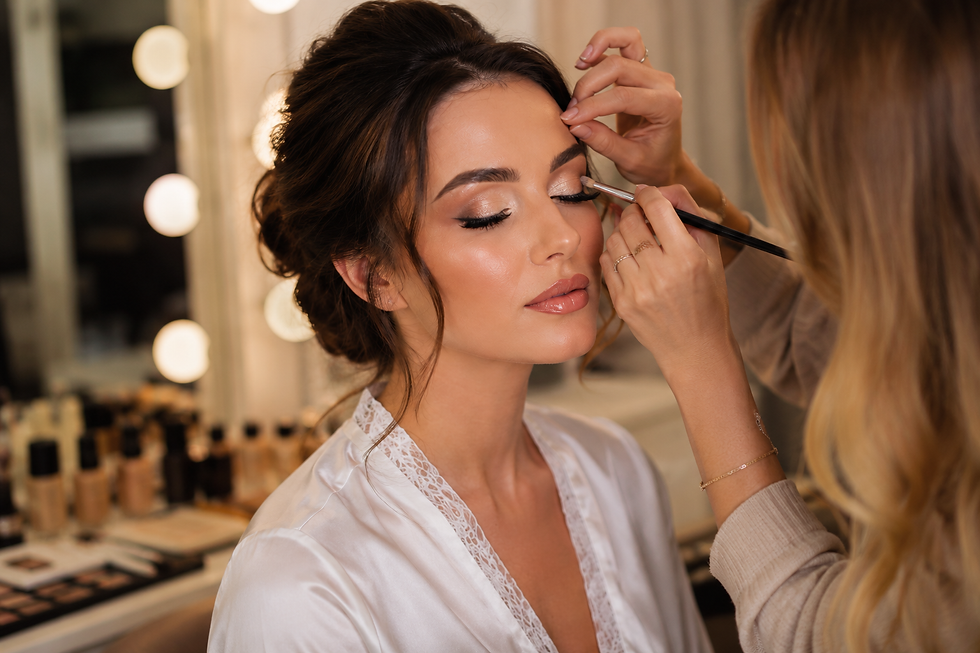
What Happens During a Bridal Makeup Trial?
Your trial should be a conversation as much as it is a makeup appointment.
Before the makeup application begins, your artist should have an opportunity to understand what you want.
You may discuss:
Your wedding dress
Wedding colors
Wedding venue
Hair style
Jewelry
Veil or headpiece
Photography
Skin type
Makeup preferences
Previous makeup experiences
Products you like or dislike
Then your artist can begin creating the look.
The process may include skin preparation, complexion products, eye makeup, lashes, blush, contour, lips, and finishing products.
Throughout the appointment, communicate with your artist.
If something feels too heavy, too light, too dramatic, or simply doesn't feel like you, say so.
That's what the trial is for.
What Should You Bring to a Bridal Makeup Trial?
Coming prepared can make your trial much more productive.
You don't need to bring everything you own, but a few items can help your makeup artist understand your vision.
1. Makeup Inspiration Photos
Look for images that communicate the things you actually like:
Skin finish
Eye makeup
Lash style
Lip color
Overall makeup intensity
Natural or glamorous finish
Remember that inspiration photos are references, not exact templates.
Your makeup artist will adapt the look to your own features, skin, coloring, and preferences.
2. A Photo of Your Wedding Dress
If your dress is already chosen, bring a photo.
The neckline, fabric, color, and overall style can help your makeup artist understand the feeling you're going for.
3. Your Veil or Hair Accessories
If you already have your veil, headpiece, or other important accessories, bring them if practical.
Seeing the accessories together with your makeup can help you evaluate the entire bridal look.
4. Your Jewelry
If your jewelry is already selected, consider bringing it to the trial.
Your earrings, necklace, or other accessories can help you see how the finished makeup balances with the rest of your look.
5. Your Skincare Information
Let your artist know about your regular skincare routine and any products that affect your skin.
This can help your artist understand how your skin behaves and choose appropriate preparation and makeup products.

How to Choose Your Bridal Makeup Look
You don't have to arrive at your trial knowing exactly what you want.
You may simply know that you want to look:
Natural
Glowing
Romantic
Classic
Soft and feminine
Sophisticated
Glamorous
Camera-ready
That's enough to start the conversation.
Your makeup artist can help translate your preferences into an actual makeup look.
Think about how you normally wear makeup.
If you rarely wear heavy makeup, a dramatic full-glam look may feel uncomfortable even if you love it in photos.
On the other hand, if you normally enjoy defined eyes and fuller coverage, you may want a more polished version of your everyday style.
Your wedding makeup should still feel like you.
Should You Coordinate Your Makeup Trial With Your Hair Trial?
If possible, coordinating your hair and makeup trials can help you see your complete bridal look.
Your hairstyle, makeup, veil, jewelry, and dress all work together.
For example, a dramatic updo may create a different overall balance than loose waves.
Similarly, a simple dress may pair beautifully with more defined makeup, while a highly detailed gown may inspire a softer beauty look.
You don't necessarily have to schedule both trials on the exact same day, but seeing the elements together can be helpful.
If you do schedule them together, make sure you allow enough time so neither appointment feels rushed.
What Should You Wear to Your Bridal Makeup Trial?
You don't need to wear your wedding dress to your makeup trial.
Instead, wear something that gives you a similar idea of the wedding-day color palette.
A white, ivory, cream, or similarly colored top can help you see how your makeup looks against a lighter outfit.
If your dress has a particular neckline that affects your overall look, bring a photo of the dress.
You can also bring your veil or accessories if you already have them.
The goal is to create enough context to understand how the makeup will work with your complete bridal look.
How Should You Prepare Your Skin Before a Bridal Makeup Trial?
Your makeup artist can work with your skin as it is, but arriving with clean, comfortable skin can make the appointment easier.
Keep your regular skincare routine consistent before the trial.
Avoid experimenting with a brand-new skincare product immediately before your appointment.
If your skin is sensitive or reacts easily to products, tell your makeup artist before application begins.
It's also helpful to let your artist know about any allergies or sensitivities.
Your trial is not the time to dramatically change your skincare routine just to make your skin look different.
Instead, use the appointment to see how your normal skin responds to the makeup and preparation your artist plans to use.
How Do You Know If Your Bridal Makeup Trial Was Successful?
A successful trial isn't necessarily one where you look exactly like an inspiration photo.
It's one where you look in the mirror and think:
“I still look like myself, but more polished.”
Pay attention to:
How the foundation feels
Whether the coverage is comfortable
How your eyes look
Whether you like the lashes
Whether the blush and contour feel balanced
Whether you like the lip color
How the makeup photographs
Whether you feel confident wearing it
Don't judge the makeup only from one mirror angle.
Look at yourself in natural light if possible.
Take a few photos.
Look at the makeup from different angles.
The goal is to understand how the finished look translates beyond the makeup chair.
What If You Don't Like Your Bridal Makeup Trial?
Don't be afraid to give honest feedback.
A trial exists specifically so you can make adjustments before your wedding day.
Instead of saying only:
“I don't like it.”
try to identify what feels wrong.
For example:
“The foundation feels heavier than I expected.”
“I'd like my eyes to look softer.”
“I want more definition around my eyes.”
“I'd prefer a less matte finish.”
“I want a more natural-looking lip.”
“I'd like a different lash style.”
“The contour feels too strong.”
Specific feedback gives your artist something actionable to work with.
A professional makeup artist should want to know what makes you feel comfortable and confident.

Should You Take Photos During Your Bridal Makeup Trial?
Yes.
Photos can help you evaluate your makeup from a different perspective than the mirror.
Take a few photos in:
Natural light
Indoor lighting
Front-facing light
Different angles
If possible, use the same phone or camera you normally use rather than relying only on a professional camera.
Your wedding photographer's equipment and lighting will be different, but your own photos can still help you notice things that aren't obvious in the mirror.
You can also keep the photos as a reference for your makeup artist.
How Long Should You Wear Your Trial Makeup?
if your schedule allows, consider wearing your trial makeup for several hours after the appointment.
This gives you an opportunity to notice:
How comfortable it feels
How your foundation wears
How your eye makeup holds up
How your lipstick wears
Whether your skin becomes oily or dry
Whether anything feels irritating
A trial can tell you much more than what the makeup looks like immediately after application.
It can also help you communicate useful feedback to your makeup artist before the wedding day.
Bridal Makeup Trial Checklist
Save this checklist before your appointment.
Before the trial:
Choose your makeup inspiration photos
Have a photo of your wedding dress ready
Gather your veil or hair accessories
Gather your wedding jewelry
Know your preferred makeup style
Tell your artist about skin sensitivities
Keep your normal skincare routine
Arrive with clean skin according to your artist's instructions
During the trial:
Communicate your preferences
Ask questions
Speak up if something doesn't feel right
Check the makeup in different lighting
Take photos
Pay attention to comfort
Confirm any changes you'd like
After the trial:
Wear the makeup for several hours if possible
Review your photos
Note what you loved
Note anything you'd change
Communicate your feedback to your artist
Keep your favorite reference photos for the wedding day
How Much Does a Bridal Makeup Trial Cost in New Jersey?
Bridal makeup trial pricing varies by artist and package.
Some New Jersey makeup artists charge separately for trials, while others may include a trial in a bridal package or offer different trial options.
For example, current NJ artists publish trial pricing in different ways, which is why it's important to ask exactly what your trial includes before booking.
Your trial may involve more than simply applying makeup.
It can include consultation, customized skin preparation, testing different techniques, lashes, product selection, and refining your final wedding-day look.
If you're comparing bridal makeup costs in New Jersey, read our full guide:
How Far in Advance Should You Book Your Bridal Makeup Artist?
Your trial is only one part of your wedding makeup timeline.
You should generally secure your makeup artist well before the trial, particularly if you have a popular wedding date or a specific artist you want.
For many New Jersey brides, starting the search around 6–12 months before the wedding gives you more flexibility.
Your trial can then be scheduled closer to the wedding once your overall bridal vision is more finalized.
For a complete booking timeline, read:
Frequently Asked Questions About Bridal Makeup Trials in New Jersey
Do I really need a bridal makeup trial?
A trial is not mandatory for every bride, but it can be extremely helpful. It gives you the opportunity to test your wedding-day makeup, communicate preferences, and make adjustments before the wedding morning.
When should I schedule my bridal makeup trial?
A common recommendation is approximately 2–3 months before your wedding, although your makeup artist may recommend a different timeframe based on your wedding plans and services.
What should I bring to my bridal makeup trial?
Bring a few makeup inspiration photos, a photo of your wedding dress, and your veil, jewelry, or other accessories if you already have them. Information about your regular skincare routine can also be helpful.
Should I wear makeup to my bridal makeup trial?
Follow your makeup artist's preparation instructions. In many cases, arriving with a clean face allows the artist to properly assess and prepare your skin before applying makeup.
Should I bring my wedding dress to the trial?
You generally don't need to bring your actual wedding dress. A photo of the dress, particularly the neckline and overall style, can give your makeup artist useful context.
Can I bring my bridesmaids to my makeup trial?
It's usually best to keep the trial focused on you and your makeup artist. If you want someone else's opinion, consider bringing one trusted person whose feedback you value rather than a large group.
What if I don't like my bridal makeup trial?
Tell your makeup artist specifically what you would like changed. The purpose of a trial is to refine your look before the wedding day, so honest and constructive feedback is important.
Can I try airbrush makeup during my bridal trial?
Yes, if your makeup artist offers airbrush makeup. A trial can be a useful opportunity to determine whether the finish and feel are right for your skin and preferred bridal look.
Should I take pictures during my makeup trial?
Yes. Taking photos in different lighting can help you evaluate the makeup and give you useful reference images for the wedding day.
How long does a bridal makeup trial take?
The length varies by makeup artist and the complexity of the look. Ask your artist how much time to set aside when booking the appointment so you don't feel rushed.
Ready to Plan Your Bridal Makeup?
Your wedding makeup should feel like you — just polished, confident, and ready for one of the most photographed days of your life.
A bridal makeup trial gives you the time to explore your look, communicate your preferences, and make sure you feel comfortable before your wedding morning.
At Glam By Jen, we take the time to understand your personal style and create a bridal makeup look that complements your features, wedding vision, and overall aesthetic.
Whether you're planning an intimate celebration or getting your entire bridal party ready, we're here to help you feel confident from the moment you sit in the makeup chair to the moment you walk down the aisle.
Ready to start planning?


Comments